
FYL / Independent product / 2026
Built for the next rep.
Making progressive overload easier to track, and consistency more rewarding to share.
Explore FYL01 / The idea
Make the work visible. Make showing up social.
I started with a question about technology and AI: could tracking progressive overload feel easier, more motivating, and social? FYL grew into a workout tracker that connects reusable plans, live logging, and the progress that accumulates between sessions.
The shipped experience starts with the training loop: know what to do next, record what happened, and see a reason to come back. Routines, personal records, friend streaks, and leagues connect those moments.
Before training
A clear next workout, without rebuilding the plan.
Between sets
Weight, reps, and rest within reach.
Over time
Progress you can understand, and consistency you can share.
02 / The workout
A small interaction, over and over again.
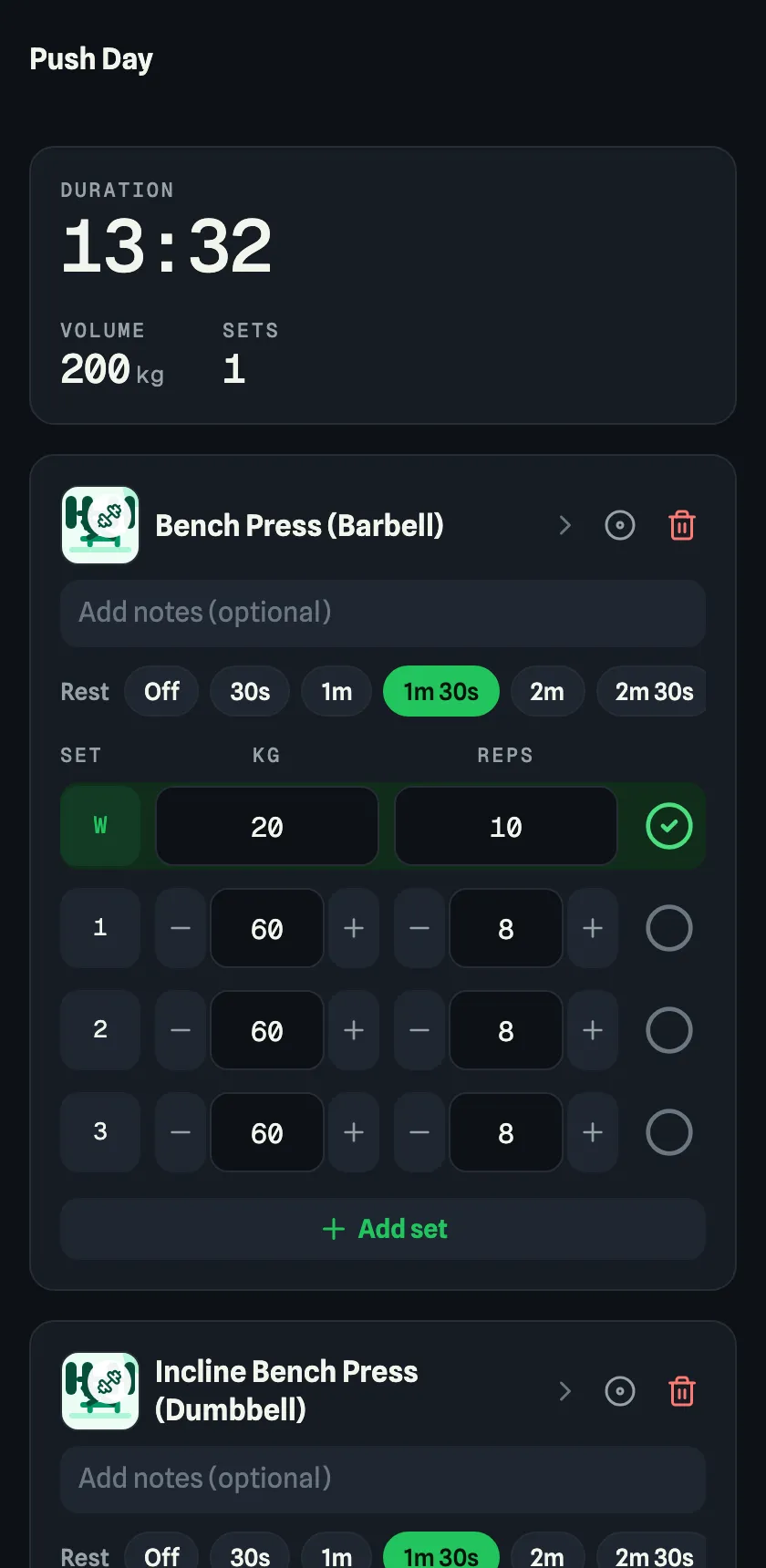
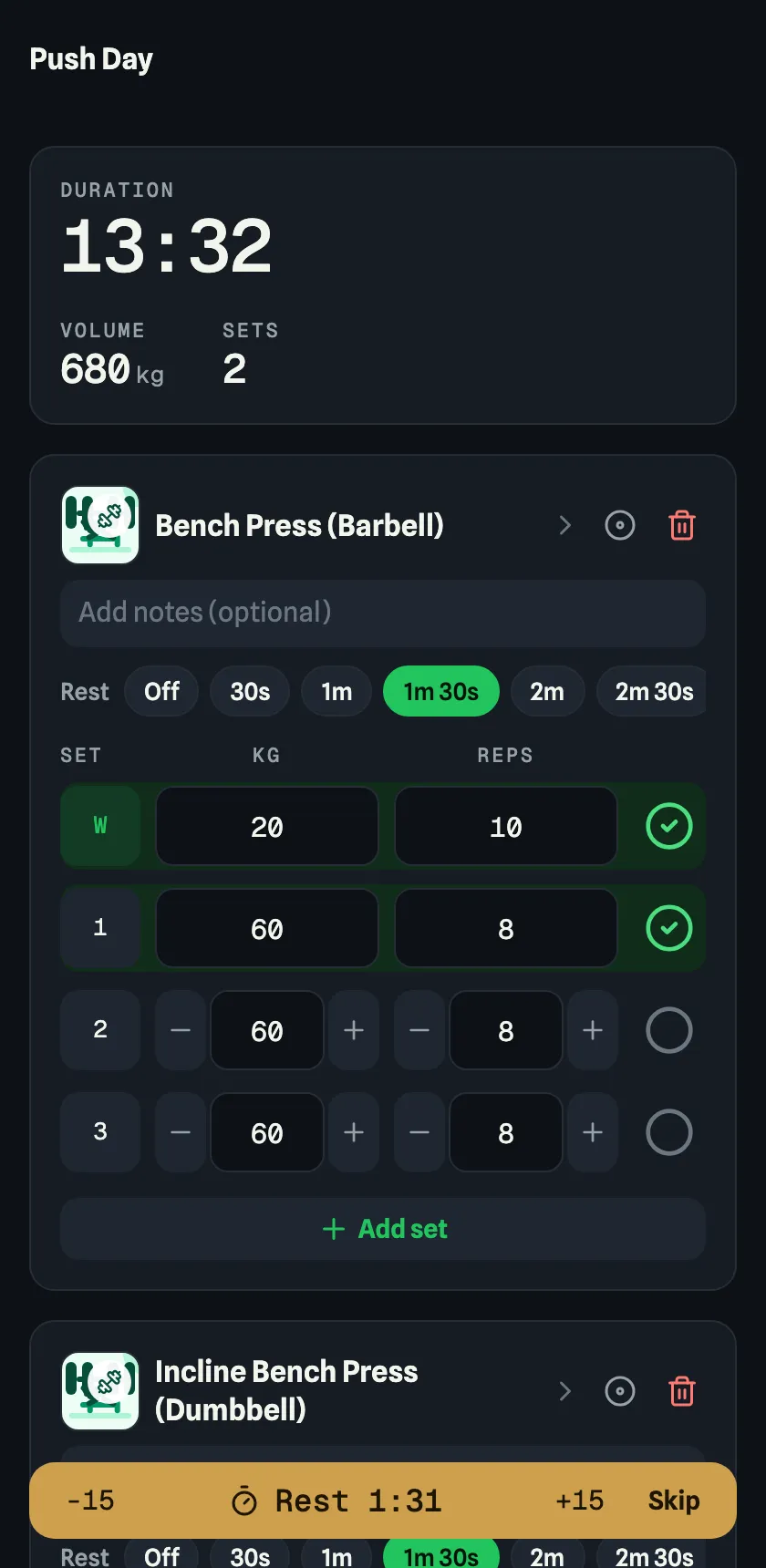
The set row is the part of FYL a lifter returns to most. Previous performance can fill empty fields, weight and reps have direct controls, and completing a set starts its rest timer. The design keeps those actions together.
Try the detail below: adjust a set, mark it complete, and watch the volume update. This is a focused case-study demo of the interaction, using sample data.
Bench Press (Barbell)
Try a set
Same hierarchy. Two environments.
03 / Design decisions
A system for attention.
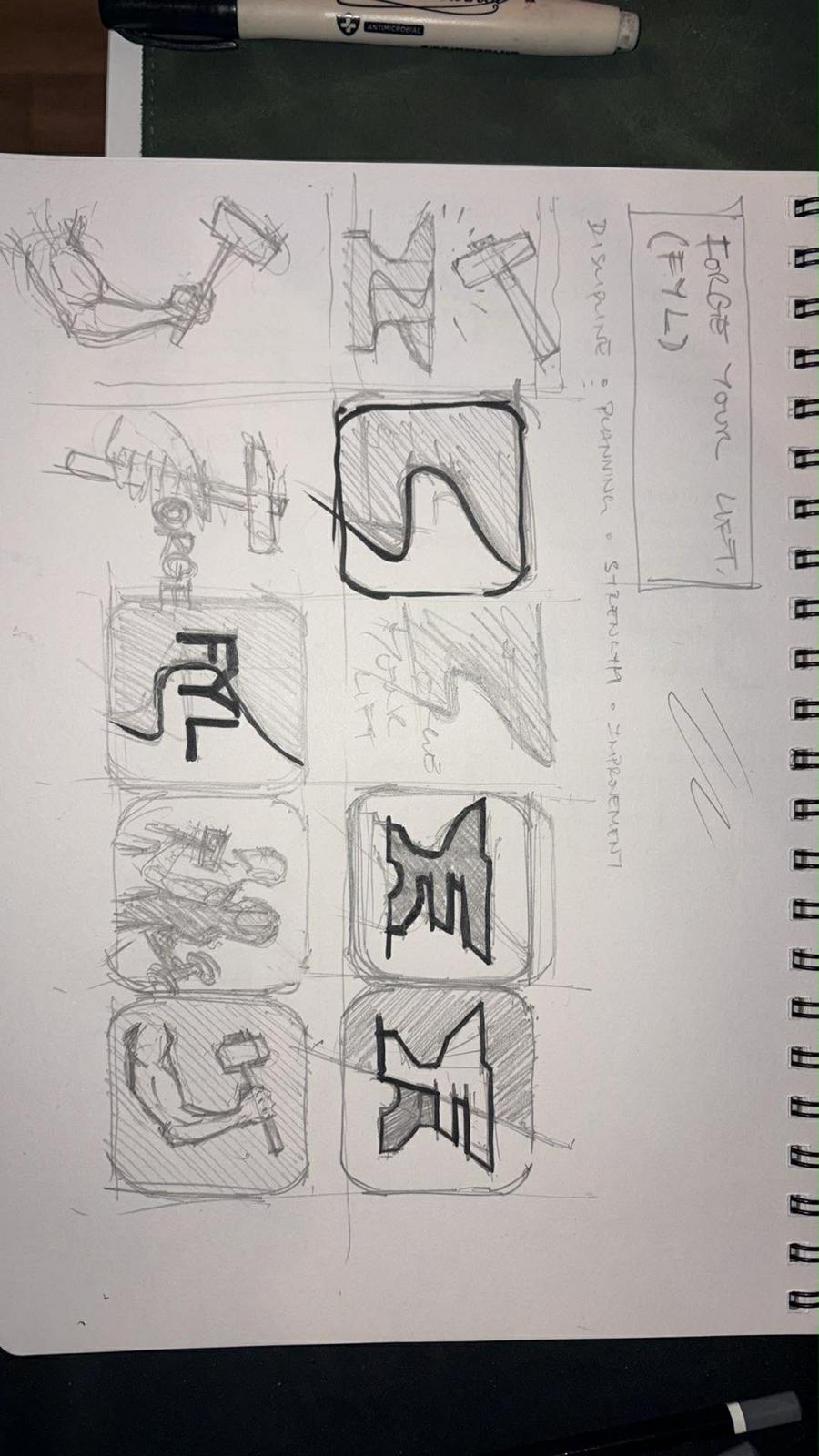
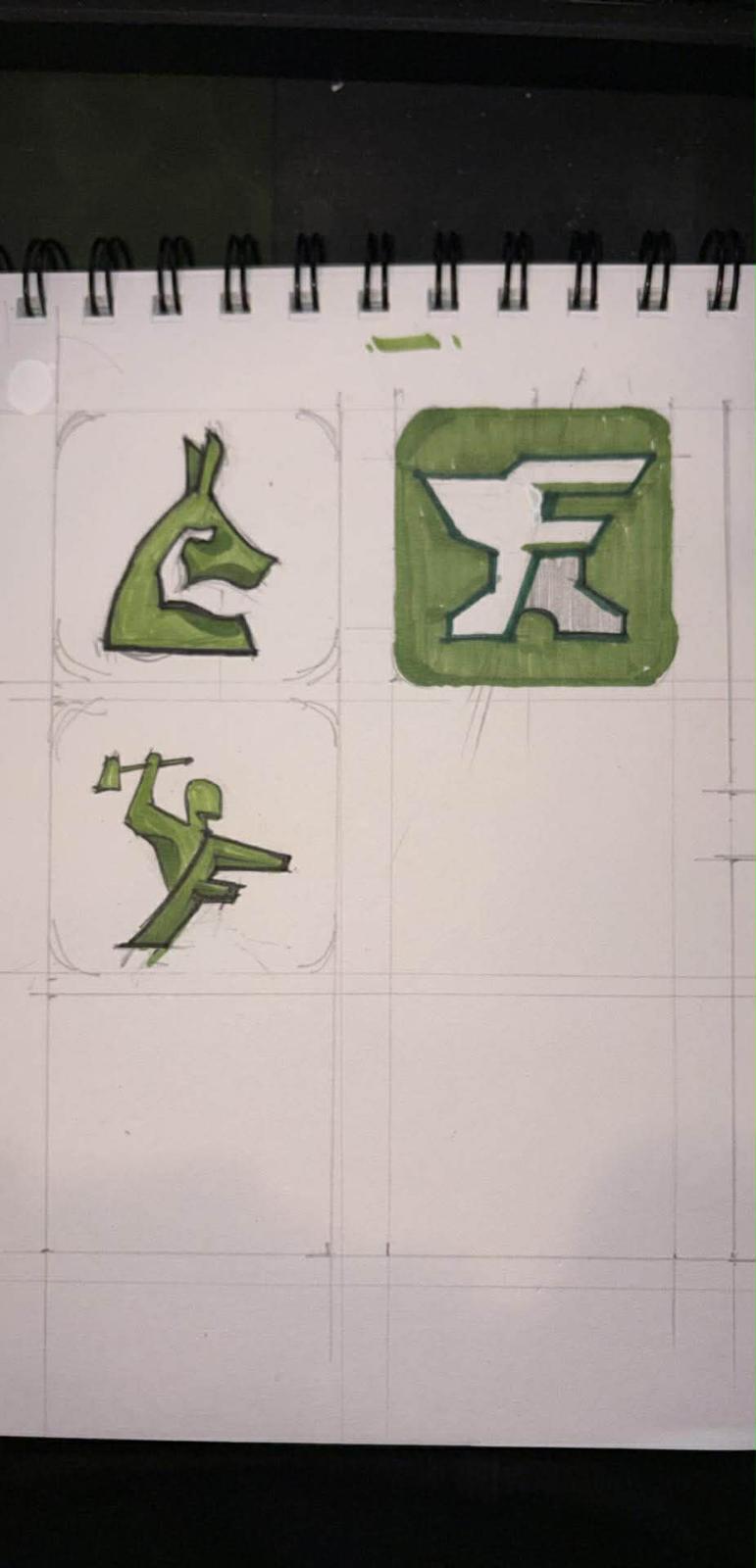
Logo design / From sketchbook to app icon
Finding the shape of “forge.”
I explored what Forge Your Lift could look like on paper: hammers, lifters, an animal mascot, and an anvil built around an F. The sketches move from a broad set of ideas to green marker studies, with the anvil direction carrying through to the finished icon.

- 01
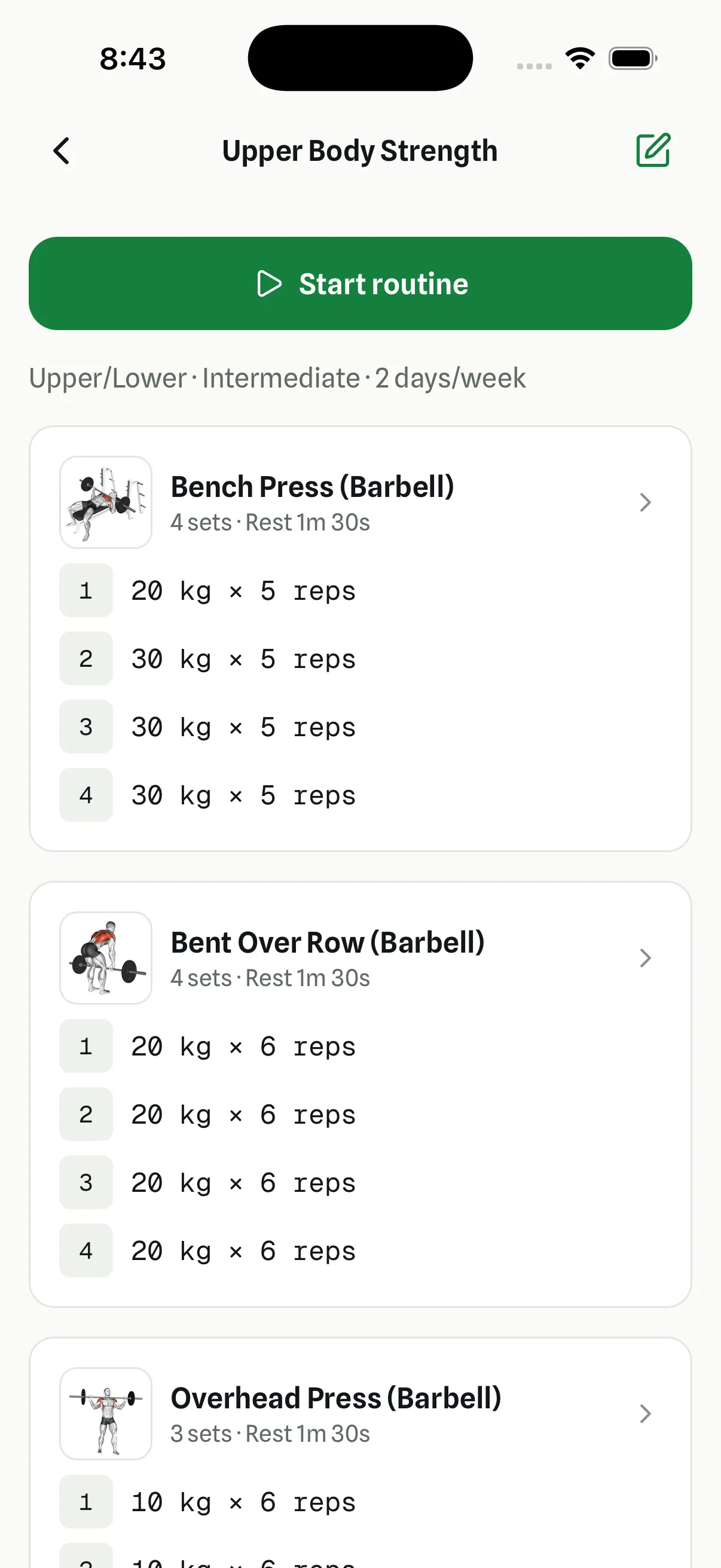
One main action per screen.
I separated Home from Workout: Home answers what to do today, while Workout holds the plan. That removed competing starts and duplicate statistics from the planning surface.
- 02
Let the numbers do the talking.
The redesign paired Geist Mono for data with Spline Sans for reading. A shared set of type roles replaced screen-by-screen styling, with an audit to keep the system consistent.
- 03
Give feedback a purpose.
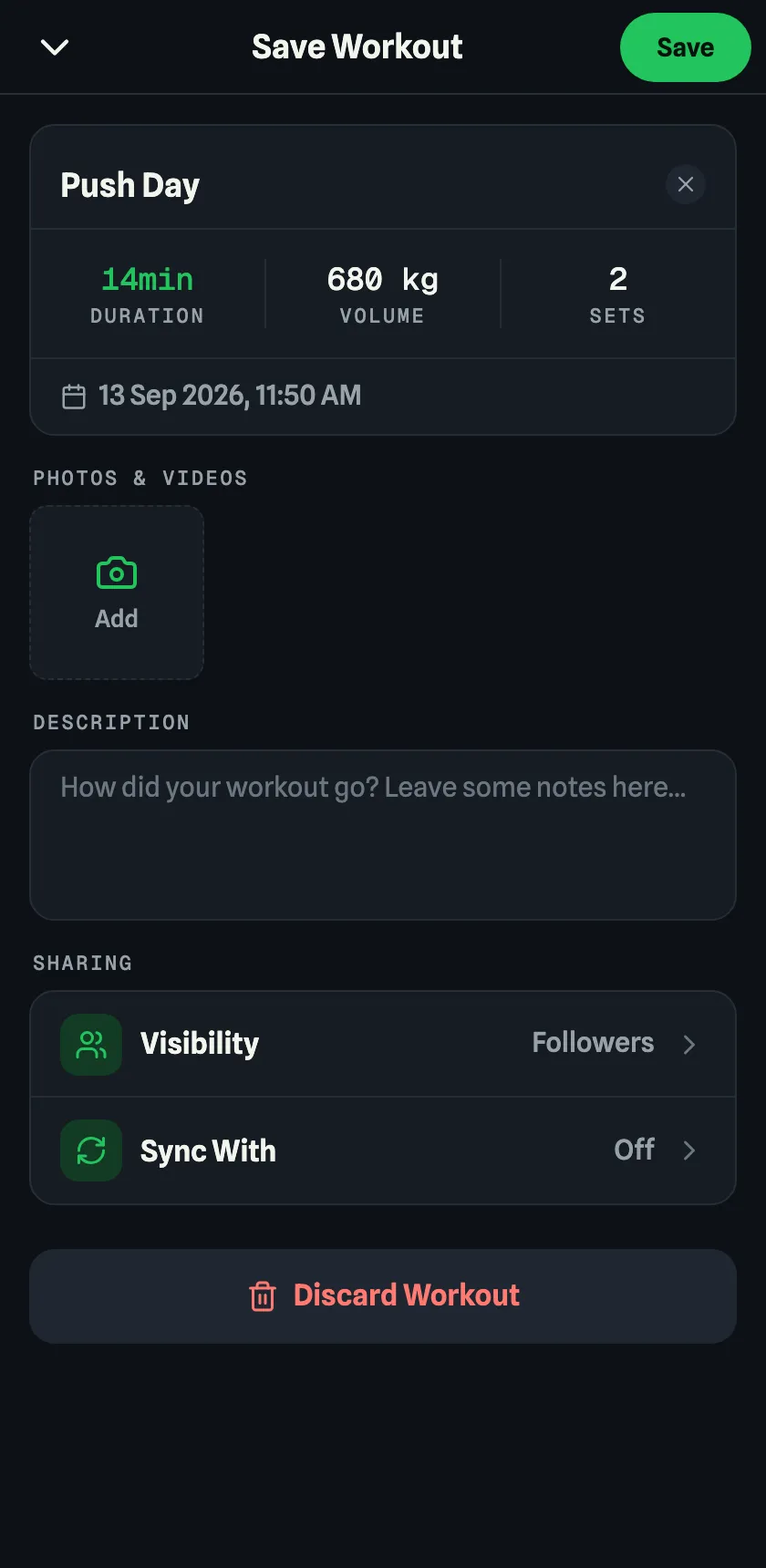
Green marks action and achievement; amber marks rest and time pressure. Set completion, PRs, and recaps get feedback, with reduced-motion alternatives throughout the app.
04 / Progress & people
Give the numbers somewhere to go.
Logging is only useful if the history becomes readable. FYL brings volume trends, personal records, estimated one-rep max, and muscle coverage back into the experience. The web dashboard gives those longer views more room.
05 / Across devices
The same session. A smaller screen.
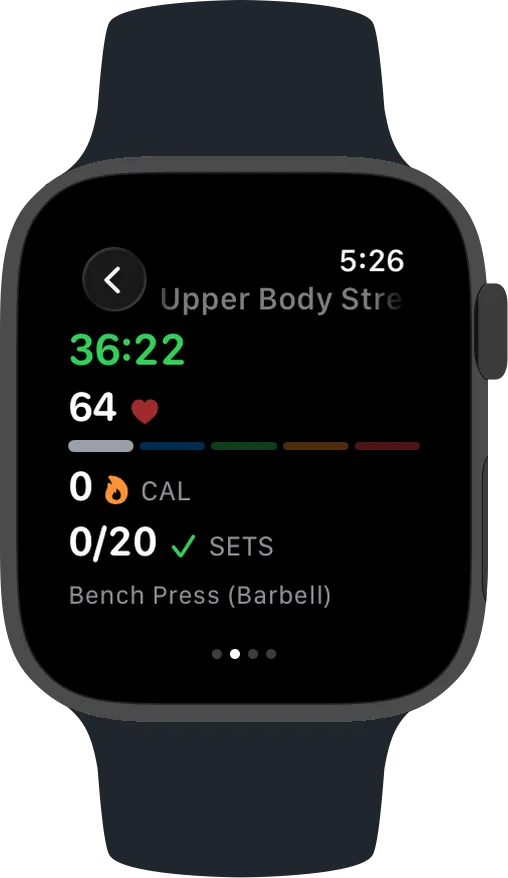
I built the Apple Watch experience as a native companion. Routines travel from the phone to the wrist; sets are logged alongside a HealthKit workout session; the finished workout returns to the phone to be saved.
That keeps the watch focused on the session, with account handling and the shared save path on the phone.
Phone
Apple Watch
06 / Scaling
Making it work was only the beginning.
Scaling was harder than I expected. I started adding caching and leaning on Supabase and Vercel to do more of the delivery work. The useful distinction was between frequently revisited app data and public content that could be cached at the edge.
Reuse app data
TanStack Query gives the app a shared cache. Queries have a freshness window and avoid refetching just because the window regains focus.
Send less
Exercise lists request the fields they display. Full instructions load on the detail screen, while search and filtering work on the loaded list.
Cache public pages
Public exercise pages use CDN caching with stale-while-revalidate. Personal workout data stays on its authenticated path.
07 / Launch & reflection
Shipped. Still learning.
- Live on the App Store
- Live on Google Play
- Web + native Watch companion
Performance is a product decision.
Caching, smaller payloads, and delivery infrastructure became part of making the app feel responsive. Scaling needs attention while the product is still taking shape.
A redesign needs enforceable rules.
A palette alone didn’t bring the screens together. Shared typography roles, consistent actions, and an audit made the visual system something I could maintain.

A routine, a set, a little progress. Repeat.
FYL is live, with free core tracking and optional Pro features.